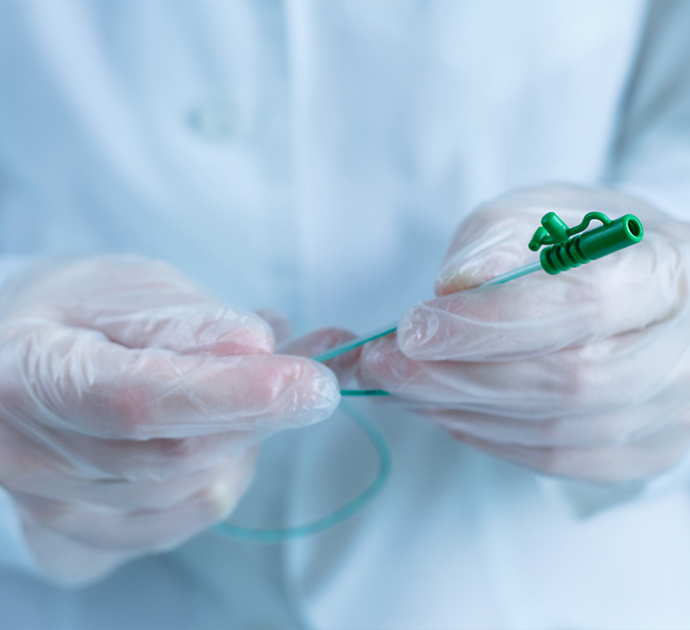

A catheter (CVC – central venous catheter) is a long, thin, flexible tube inserted into the body through a large vein. It is generally used to administer medication, fluids or blood products, to take blood samples or for dialysis. Depending on its purpose, it is placed in different areas, most often the neck, chest or groin. Proper placement and care of the CVC reduce the risk of infection and other complications. In long-term treatment or when frequent blood samples are needed, a CVC provides great comfort for patients.

Catheter Use in Dialysis
A central venous catheter (CVC) is used as a temporary or permanent vascular access method for patients who need dialysis treatment. It provides a flexible and safe route for transferring blood to the dialysis machine and returning it to the body.
Catheter (CVC) Placement Sites for Dialysis
Dialysis catheters (CVC) are usually placed in the large veins of the neck, chest or groin. The chest area is generally preferred for long-term use, while the groin is used more often for temporary access.

Regular and careful care of the catheter is essential. The catheter exit site must be kept sterile and observed continuously for possible signs of infection. The catheter may also be flushed with a heparin solution to prevent blockage.
Possible complications of catheters used in dialysis include local infection, blockage, air embolism and displacement of the catheter. These risks can be minimized with correct placement techniques and regular care.
How long can a dialysis catheter be used?